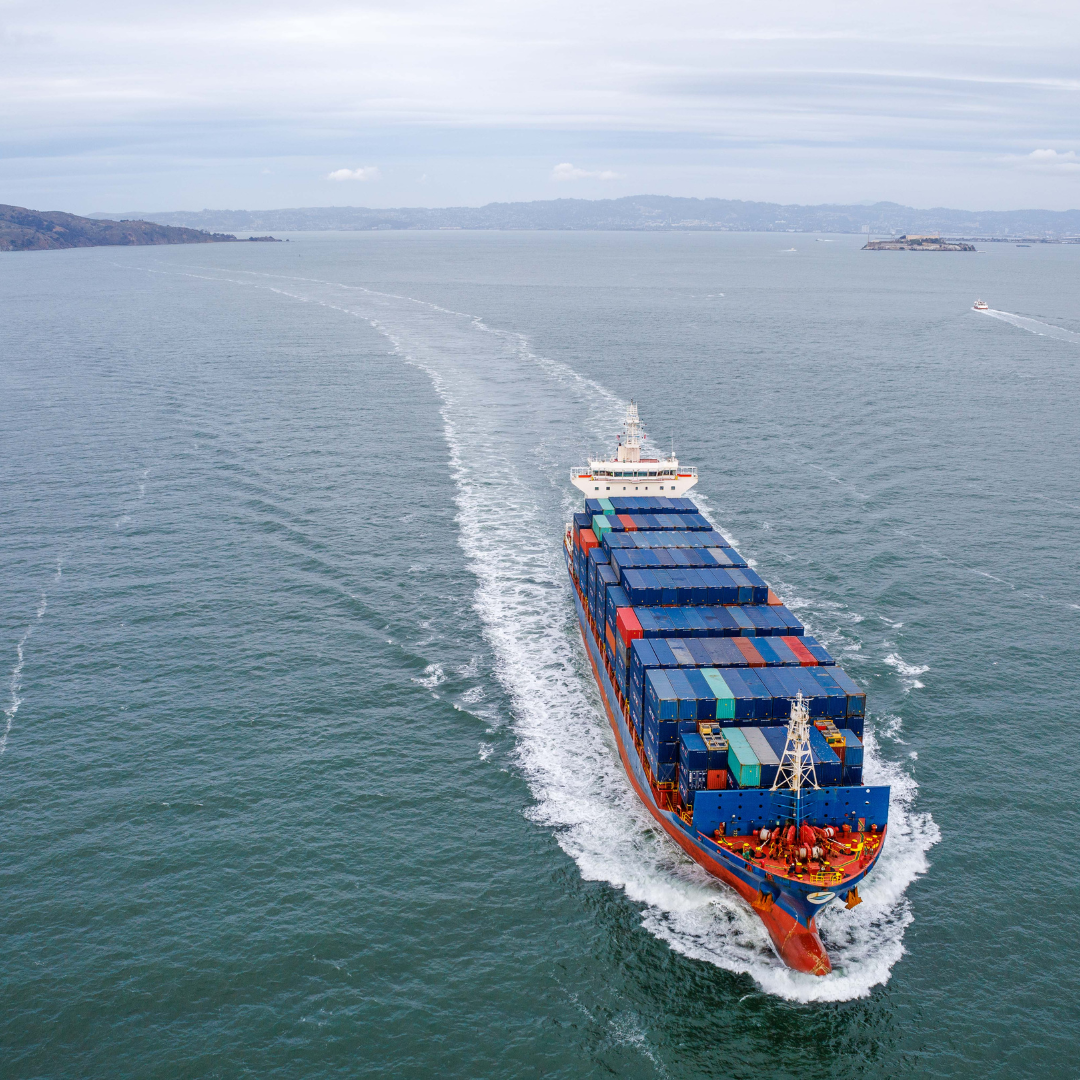
Australia’s Port Geography and the Legacy of Deep‑Water Dependence
For more than a century, Australia has built its export economy around a handful of deep-water ports scattered along the coastline. These ports have served the nation well, but they have also shaped, and often constrained, the industries that depend on them. If you were close to a major port, your product could compete globally. If you were not, distance became destiny, with long road hauls, expensive rail legs, high emissions, and margins eroded before the cargo ever reached the ship.
This geography driven logic has defined regional development for generations. It has determined where industries grow, where investment flows and which communities thrive. It has also locked Australia into a high-cost logistics model that is increasingly out of step with modern technology, environmental imperatives, and the economic realities of a decentralised nation.
A New Question: Why Not Bring the Port to the Product?
A quiet revolution is now challenging that logic. Instead of forcing the product to the port, the emerging question is why not bring the port to the product ? Across Australia and internationally, a new generation of decentralised port and transhipment systems is emerging, systems that deliver full export capability at a fraction of the capital cost of traditional deep-water ports. These models are already reshaping supply chains in remote regions and are now poised to unlock new economic frontiers.
The Structural Limits of Traditional Port Models
This shift is not simply about new vessels or new infrastructure. It represents a fundamental rethinking of how a maritime nation like Australia connects its regions to global markets. Deep water ports have long been treated as immovable anchors of national logistics. They require extensive dredging, large scale civil works, complex regulatory approvals, and billions of dollars in capital investment. Once built, they are fixed assets that shape supply chains for decades. This model comes with structural limitations. High capital intensity means only a small number of ports can be justified nationally. Long lead times slow down regional development and investment decisions. Environmental impacts are increasingly difficult to justify. Distance penalties fall disproportionately on inland and remote producers. Congestion and monopoly dynamics inflate costs for exporters and importers. Expansion is constrained by their location in major cities where land, road and rail capacity is expensive to increase.
In a country as vast and sparsely populated as Australia, relying on a handful of deep-water ports creates inefficiencies that ripple across the entire economy. It also leaves regions vulnerable to single point failures, whether from weather events, industrial action, infrastructure outages, or geopolitical shocks. The question is no longer whether this model is sufficient. It is whether it is still fit for purpose.
Decentralised Port Systems and the Rise of Modern Transhipment
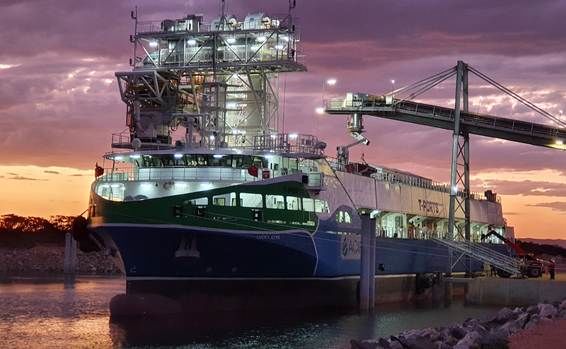
Decentralised port systems challenge the assumption that deep water is the only gateway to global trade. Instead, they use a combination of shallow draft mini ports, automated loading systems and purpose designed transhipment vessels to move cargo from the coast to deep water ships offshore, and in reverse for imports. The concept is simple, but the execution is not. Done poorly, transhipment is slow and costly. Done well, engineered with precision, automation and managed well with lean operations, it becomes a high-performance logistics system capable of matching or beating the operating costs of conventional ports.
The Economics of Efficiency Through Design
The economics are compelling. Capital costs fall to between 10 and 25 percent of a traditional port. Dredging is minimal. Operating costs drop through automation. Commercial viability is achieved at far lower throughput. Systems can scale with industry growth. Entire operations can be powered by renewable off grid energy. Australia has already seen this model succeed. Early remote area export systems demonstrated that bulk commodities could be shipped reliably without major civil works and without the environmental disruption associated with deep water port construction. These projects established a truth that now sits at the heart of the decentralisation philosophy driven by Seatransport, which is that efficiency is not a function of dimension but of design.
Lessons From the Grain Port Revolution
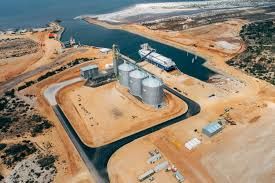
That principle reached a new level with the emergence of privately developed grain ports that placed export infrastructure closer to the farm gate. By cutting road distances by up to 70 percent, eliminating Port Authority charges and using high efficiency transhipment vessels for the final offshore leg, these systems delivered growers a more competitive pathway to global markets. The lesson was clear. When infrastructure is managed efficiently and designed around the product rather than the port, entire regions become economically viable.
The Stern Landing Vessel: A Hybrid That Redefines Access
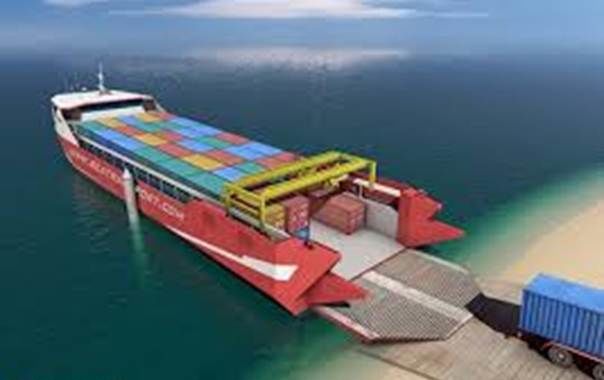
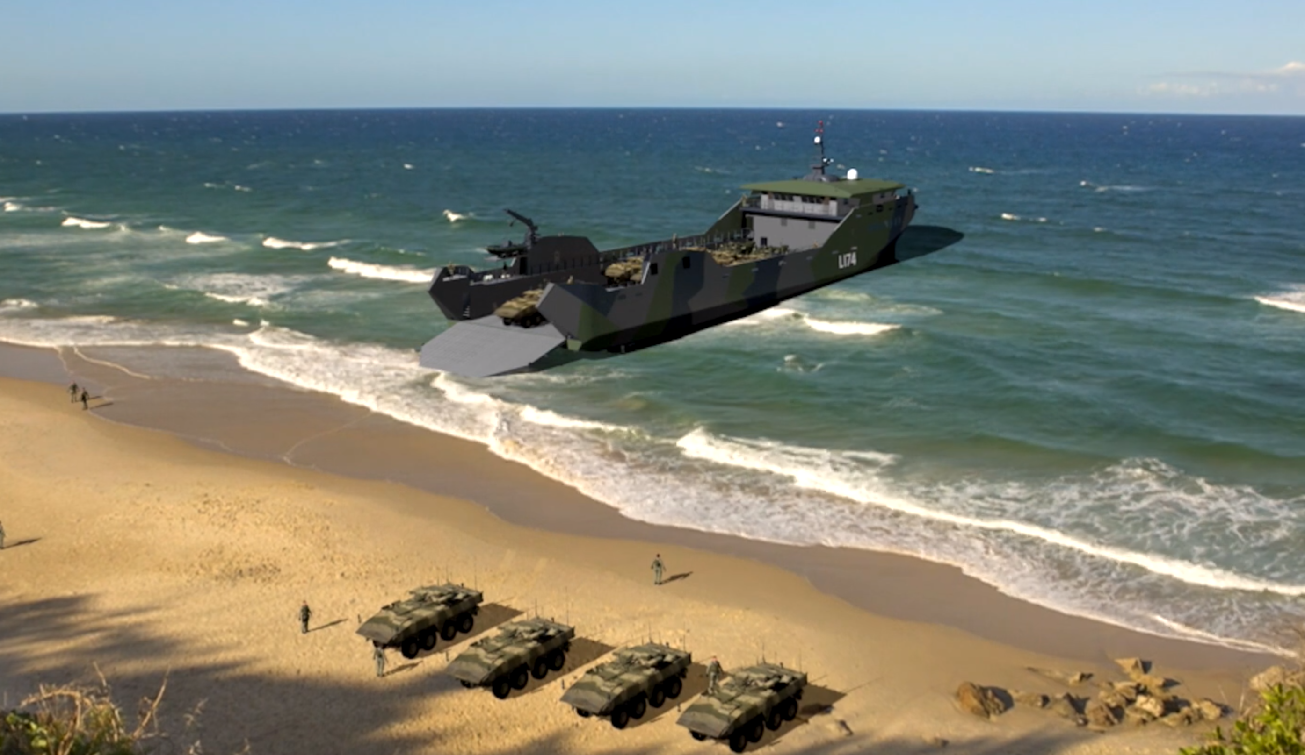
One of the most transformative developments in this space, outside of the highly sophisticated transhipment vessels, is the rise of the Stern Landing Vessel, a blue water and brown water hybrid capable of crossing oceans and then landing on unprepared beaches or simple stub ramps. This dual capability is globally rare and has attracted international attention, including from defence agencies exploring new models of resilient logistics. The SLV represents a new category of national infrastructure, one that blends maritime engineering, logistics innovation, and regional development strategy. In its roll on roll off configuration, the SLV allows trucks, trailers, and mobile oversized plant to drive directly on and off the vessel. This eliminates double handling, container yard storage charges, high-cost crane operations, and long-haul road legs to distant deep-water ports. For many regional supply chains, this single innovation can reduce total logistics costs massively, while cutting emissions and removing thousands of heavy vehicle movements from rural highways.
Energy Independence and the Future of Maritime Fuel
Energy independence is now the next frontier. Hydrogen, liquid ammonia, and other renewable marine fuels are increasingly examined as pathways to decarbonise coastal shipping, but each comes with distinct trade-offs in energy density, storage complexity, cost and operational practicality. Hydrogen offers zero carbon emissions at the point of use but has much lower volumetric energy density, at around 2,400 watt hours per litre for liquid hydrogen compared with roughly 10,500 watt hours per litre for diesel, requiring either cryogenic storage at minus 253 degrees Celsius or compressed storage at very high pressures, both of which impose major space, weight and cost penalties for coastal vessels. Ammonia, by contrast, is a carbon free fuel with a higher volumetric energy density than hydrogen and far simpler storage requirements, remaining liquid at minus 33 degrees Celsius or at modest pressures. It also benefits from an existing global handling and transport infrastructure. However, ammonia’s toxicity, corrosiveness and the risk of nitrogen oxide emissions create safety and regulatory challenges that increase system cost and require specialised materials and leak prevention systems. Renewable methanol and other synthetic fuels offer easier handling but remain carbon containing and require large scale green production to be viable. Across all options, the calorific value gap relative to diesel, the storage penalties and the cost of new fuel systems mean that while these fuels are technically feasible for coastal vessels, they currently impose operational compromises that nuclear powered or modular reactor ready vessels are designed to avoid. Work is now underway globally to integrate marine modular reactors into future vessel classes, a development that positions maritime transport at the forefront of next generation energy systems. With global fuel markets destabilised and supply chains exposed to volatility, the ability to operate low emission, energy independent vessels is no longer futuristic. It is strategically essential. Modular reactor ready vessels offer near zero operational emissions, immunity from fuel price shocks, dramatically lower whole of life energy costs and unmatched endurance for remote or offshore operations.
A Vessel for All Conditions
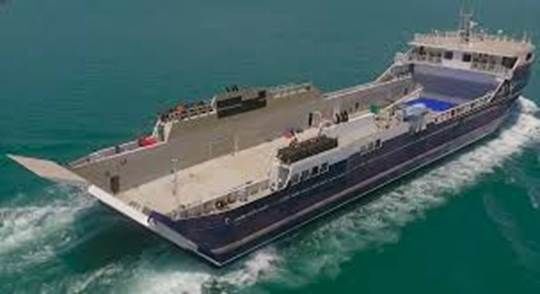
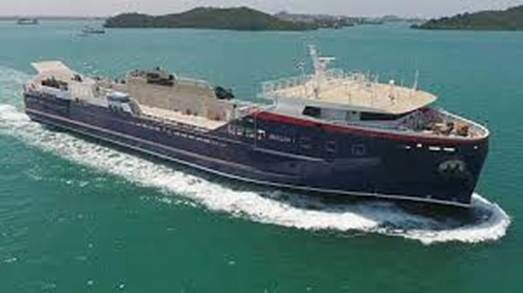
The SLV’s shallow draft, beach landing capability, high stability, and expansive deck area also make it well suited for offshore wind construction, remote island and reef logistics, defence mobility, littoral operations, and emergency response. Where conventional vessels require ports, tugs, pilots, or dredged channels, SLVs generally require none of them, operating independently, efficiently, and reliably in environments that defeat traditional marine assets.
Australia’s Port Density Problem
Australia’s port geography further reinforces the case for decentralisation. Despite having one of the longest coastlines in the world, approximately 25,760 kilometres, Australia has only around 66 ports, giving it a port density of roughly one port per 390 kilometres of coastline. By comparison, the United Kingdom has 185 ports along 12,429 kilometres of coastline, or one port every 67 kilometres. Japan has 163 ports along 29,751 kilometres, or one every 183 kilometres. The United States, with a coastline similar in scale to Australia’s at 19,924 kilometres, has 666 ports, or one every 30 kilometres. Australia’s extremely low port density is not a historical accident but a direct consequence of relying on a small number of deep-water gateways that require high capital investment and extensive civil works. This sparse distribution means vast stretches of coastline remain economically underutilised, leaving inland regions dependent on long haul road and rail corridors and limiting the nation’s ability to unlock new export zones or diversify supply chains.
Beyond Bulk: A National Opportunity for Coastal Shipping
The opportunity extends far beyond bulk exports. Australia’s long, sparsely populated coastline is one of the nation’s most underutilised assets. With shallow draft ports, sometimes as simple as a stub ramp, and vessels capable of independent beach landings, coastal shipping can replace a significant portion of long-haul road and rail transport. The benefits are clear. Freight costs fall, fuel consumption drops, heavy vehicle movements on regional roads decline, emissions reduce and untapped resources become viable through the creation of an economically efficient path to market. The national resilience benefits are equally significant. Vessels that can land on unprepared beaches become invaluable during floods, cyclones, bushfires, or other disasters that cut off road and rail networks. States could adopt a dormant lease model, giving them access to emergency capability without carrying the full cost of ownership. This is not just a logistics reform. It is a resilience strategy.
Infrastructure Decentralisation Through Innovation
What ties all of this together is a simple but powerful idea, which is infrastructure decentralisation through innovation. By breaking the notional monopoly of deep-water ports and distributing infrastructure closer to where products are grown, mined, or manufactured, Australia can unlock new industries, strengthen regional communities, and build a more resilient, efficient, and sustainable logistics network. The traditional port model will always have its place, but it should no longer be the only model. Technology has moved on. The economics have moved on. The environmental imperatives have moved on. The regions long constrained by distance are ready to move on as well.
A Future Defined by Regional Strength
Decentralised port and transhipment systems offer a pathway to that future. They are not theoretical. They are not experimental. They are proven, operating and delivering real economic value today. As Australia looks to diversify its economy, strengthen its supply chains and reduce its emissions, the case for bringing the port to the product has never been stronger.
The next decades will belong to the regions that embrace this shift and to the industries bold enough to rethink what a port can be.
About the Author
Kieran Carvill is a senior maritime and logistics specialist with more than three decades of experience across port development, coastal shipping, commodity logistics, and international trade.
As director of Port Development at Seatransport, he leads integrated programs that unify strategic planning, engineering development, investment modelling, and regulatory navigation. He also serves as CEO of Spencer Gulf Searoad, following earlier executive roles with T Ports, CBH International Commodity Services, Cargill, and European trading firms.
Kieran is recognised for his distinctive end‑to‑end capability in port development, identifying strategic need, shaping development concepts, leading technical and commercial design, overseeing delivery, and establishing the operational and governance frameworks that underpin long‑term asset performance. His whole‑of‑project discipline ensures port assets are conceived well, built well, and operated with commercial and operational integrity, supporting modernised infrastructure and sustainable regional growth across Australia’s maritime sector.
If you have further questions, or would like to speak with Kieran please get in touch.